Support
This page contains information on a variety of hearing conditions, for self help, and how/where to get advice and support for hearing problems. Links to further sources of information and help are also provided.
Hearing Conditions
Tinnitus is just one of several conditions that can affect one’s hearing. The following are several of the common and not so common:
- Tinnitus – almost everyone will have experienced a constant tone in their ears at some point, often after going to a loud disco or concert, which usually dies away by the following morning. However, for some, tinnitus is a constant ‘noise’ in one or both ears. This noise could be just a single tone, or far more complex and intrusive, including for some, a sound that follows their heartbeat. It can affect sleep and have significant mental health impacts.
- Loudness Hyperacusis – is an increased sensitivity to sound, such that sounds which may not be loud to someone with ‘normal’ hearing can be much louder to a hyperacusis sufferer. Sudden sounds can be quite startling and quieter sounds far more prominent and noticeable.
- Pain Hyperacusis – a variant on the above such that even ‘average’ volumes of sound can be experienced as painful
- Misophonia – a hatred or annoyance towards particular sounds
- Recruitment – a condition whereby the dynamic range of hearing is considerably reduced, such that quiet sounds are inaudible. For instance, someone who asks another to speak up, but then tells them not to shout when they do speak more loudly. It is a physical condition related to significant hearing loss.
Support and Treatment
Whilst most people will have Tinnitus, for some it will not adversely impact their hearing or affect their lives, but for others the impact can be dramatic. In this case, it is important to seek advice. As well as attending the Tinnitus IoW Support Group, going to one’s GP and potentially requesting a referral to Audiology at St Mary’s is a good first step.
Unfortunately, not all GPs are aware of the help that Audiology can provide outside of just providing hearing aids for hearing loss, so you may need to request this. Referrals to ENT (Ear, Nose and Throat) consultants would not generally be the first port of call for Tinnitus or for the other hearing conditions listed unless the Tinnitus is just, or predominantly, in the one ear.
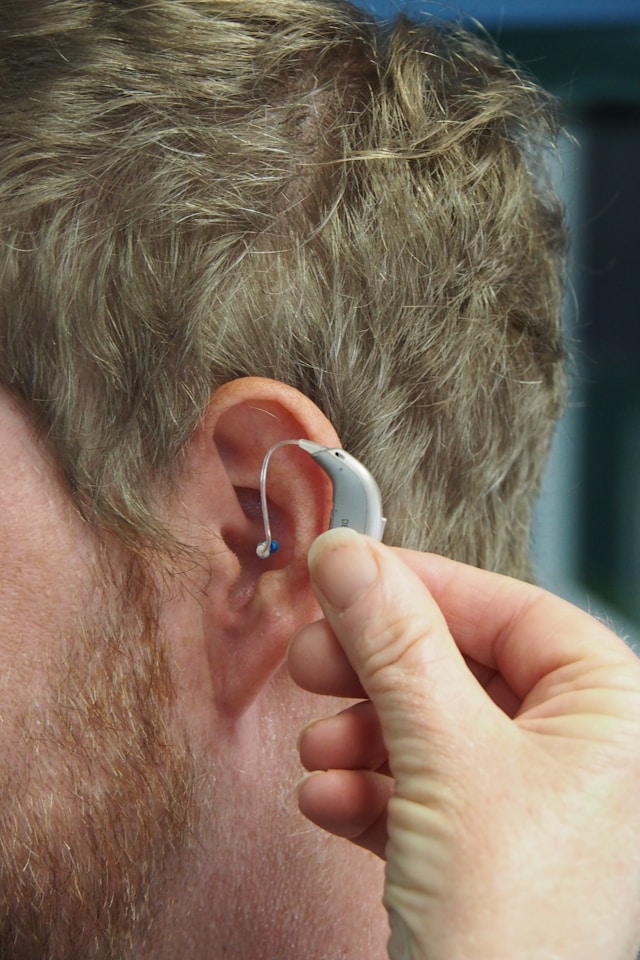
Following a referral, depending upon the condition, treatments can vary from medical procedures, through the provision of hearing aids (appropriately programmed by an Audiologist) and sound therapies, to mental health treatments such as Cognitive Behavioural Therapy (CBT).

Self Help
The impact of living with a hearing condition can often be mitigated through a variety of relaxation techniques. Some are listed below:
- Walks/Hikes – as well as being beneficial to one’s physical wellbeing, walking can also be a good form of relaxation, especially on the Isle of Wight with such beautiful scenery on our doorsteps
- Meditation – whilst often associated with Buddism, or with people sitting in a Lotus position, meditation is something anyone can do sitting on a chair at home for say twenty minutes, breathing deeply and slowly, allowing all their arms, legs, shoulders etc. to fully relax, trying to concentrate on their breathing (see link below)
- Progressive Muscle Relaxation – can also help, being a process whereby muscles are progressively tightened for a few seconds then released, working from the feet up to the face (see link below)
- It may sound obvious, but simply taking a break and sitting down for a tea/coffee/cordial and reading a book
Useful Other Sources of Information
Further information can be found by clicking on the following links: